
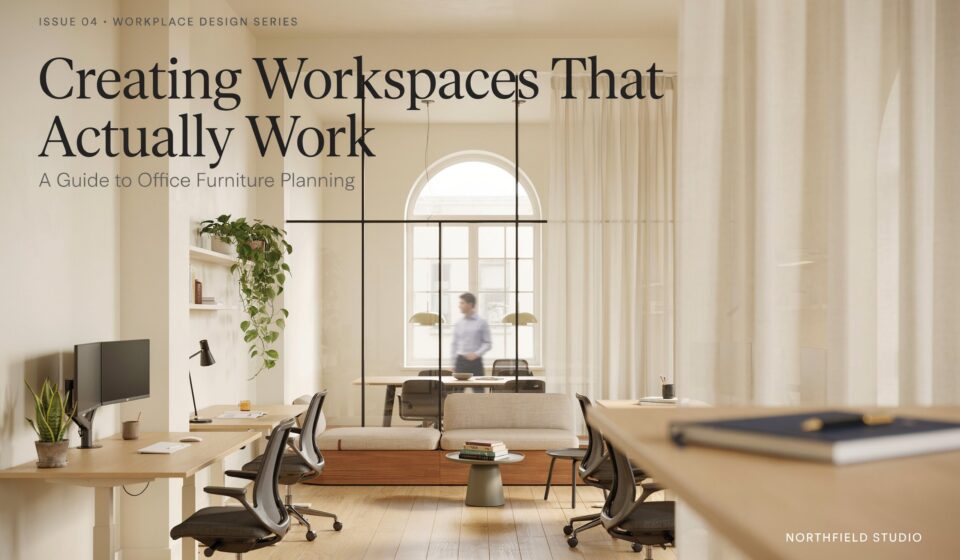
The Link Between Environment and Performance
Decades of workplace research have established a clear and consistent finding: the physical environment in which people work has a measurable impact on their productivity, creativity, focus, and wellbeing. An office that is poorly designed — uncomfortable seating, inadequate lighting, disorganized storage, and a layout that impedes collaboration — is a constant, low-level drain on everyone who works within it.
Conversely, a well-designed office communicates professionalism, supports different modes of work, and contributes to the sense of purpose and engagement that drives high performance.
Planning the Layout First
Before any furniture is selected, the layout of the office must be determined. This requires a clear understanding of how the organization actually works — how many people need to be accommodated, whether the work is primarily individual or collaborative, and how much client interaction the space needs to support.
Open-plan layouts favor collaboration and communication but can compromise focus for tasks requiring deep concentration. Most modern offices aim for a hybrid approach — a mix of open collaborative areas, focus booths or quiet zones, meeting rooms of varying sizes, and informal spaces that support different work styles.
Workstations: The Core Investment
The workstation is where the majority of the office furniture budget is rightly concentrated. A good workstation provides adequate surface area for the work being done, appropriate storage for frequently accessed materials, and a configuration that allows for healthy ergonomic posture.
Modular office furniture systems allow workstations to be configured and reconfigured as organizational needs evolve. Modular components — desk surfaces, pedestals, screens, storage units — can be rearranged, added to, or repurposed as teams grow or change, offering a significant advantage in an era when work patterns are in constant evolution.
Storage Solutions for the Modern Office
Despite the promise of the paperless office, most organizations still deal with significant volumes of physical documents, materials, and equipment. Providing adequate, accessible storage is essential for maintaining an organized workspace.
Centralized filing systems, personal pedestals, overhead cabinets, and mobile caddies all serve different storage functions. The key is designing a storage strategy that keeps workstation surfaces clear — clutter on work surfaces is not merely aesthetic; it is a genuine impediment to effective work.
Meeting and Collaboration Spaces
Meeting rooms and collaboration spaces deserve as much design attention as individual workstations. A meeting room with uncomfortable chairs, poor acoustics, and inadequate technology support creates friction in the collaboration process.
Informal collaboration spaces — lounge areas, café-style zones, standing meeting tables — support the spontaneous, unscheduled interactions that are the source of much organizational creativity. These spaces should feel different from the primary work area — more relaxed, more casual — while still communicating the organization’s brand values.
Ergonomics: Non-Negotiable
Ergonomics is not a luxury in office furniture design — it is a baseline requirement. Poorly designed workstations that force users into unhealthy postures are a leading cause of musculoskeletal problems, which in turn lead to absenteeism and reduced productivity.
Adjustable chair height, lumbar support, monitor positioning at eye level, and appropriate keyboard placement are all elements of a basic ergonomic standard. High-quality ergonomic chairs and height-adjustable desks represent a significant upfront cost but typically deliver strong returns through reduced absence and improved productivity.
Investing in the Right Environment
The physical workspace is one of the most visible expressions of an organization’s values and culture. For employees, it signals how much the organization values their comfort and effectiveness.
For insights on creating workspaces that perform at the highest level, the Holzbox Interior Design Blog provides excellent guidance on furniture selection and office space planning that can help any organization make smarter investment decisions.